What Actually Helps New Parents, and What Just Piles Up
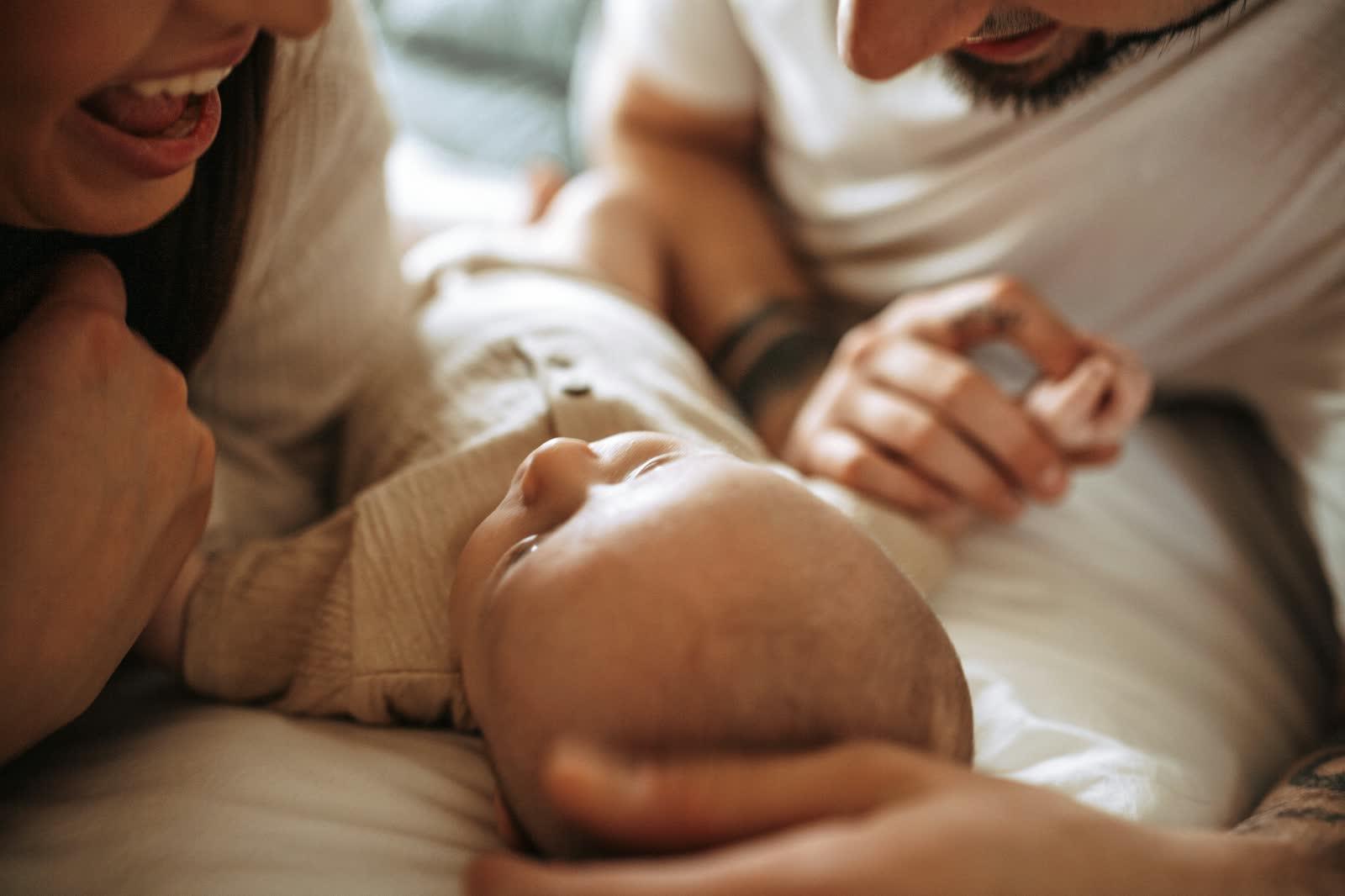
Three lasagnas arrive on the same Tuesday. By Friday the fridge is empty again and nobody is coming. That pattern repeats in almost every household with a new baby in it, and it is the single most useful thing to understand before you decide what to send.
The short version: the help arrives in a lump when the news is fresh, then stops. Sending something later, in a form that can be eaten with one hand, is worth more than sending something impressive now.
The pile-up is a timing problem, not a generosity problem
Everyone means well. The trouble is that everyone means well during the same ten days.
Meal train organizers describe the failure mode plainly: food shows up all at once, so there is far too much for three days and nothing for the rest of the week. Freezer space runs out. Some of it spoils. And the family ends up apologizing to people who went to real trouble.
The gap is predictable enough to plan around. For the first week or two the house is full, relatives are visiting, and the excitement is doing the work. Weeks three through six are when the visitors stop, the leave runs out, and the reality lands. Organizers routinely advise scheduling your contribution into that later window rather than the first rush.
So the most valuable thing you can do is be late on purpose.
What gets eaten versus what gets moved around the counter
There is a category of food that new parents actually consume, and it has nothing to do with how nice it is.
The test is whether it can be eaten cold, with one hand, standing up, at an hour that is not a mealtime. Feeding a newborn means one arm is permanently occupied, and it means the hungry moment arrives at three in the afternoon or two in the morning rather than at dinner. Advice for meal trains keeps landing on the same shape: grab-and-go items, single portions, things that reheat in under two minutes, and snacks that survive being picked at over a day.
Against that, a beautiful dish that needs assembling, plating, or a knife is a chore wearing a gift's clothing. It has to be dealt with while the baby is asleep, which is exactly the window the parents wanted for sleeping themselves.
Cupcakes sit on the right side of that line, and it is worth being precise about why. They are already portioned. They need no cutlery, no plate, and no decision. They keep at room temperature for a day, so they do not compete for the fridge space the casseroles are already fighting over. And they are the rare food where eating one at four in the morning feels like a small kindness to yourself rather than a failure of discipline.
The doorstep problem
Anyone who has visited a newborn knows the arithmetic. The parents finally got the baby down. The doorbell is a grenade.
This shapes delivery more than people expect. A few things that help:
Say when, not whether. "I am dropping something at the door Thursday afternoon, no need to answer" removes the obligation to host. The worst version of a gift is one that requires the recipient to be presentable.
Leave it and go. The visit and the food are two separate offers, and most new parents want the second more than the first, at least early on. If you want to see the baby, ask about that in a different message.
Text on arrival instead of ringing. Doorbells wake babies. Phones are usually already on silent.
Skip the window between roughly 6pm and 9pm. That stretch is when the evening fuss tends to peak and when parents are trying to establish anything resembling a routine.
None of this requires coordination with the family, which is the point. Every question you ask is a small task you have handed to someone with no capacity for tasks.
Ordering it from somewhere good, without asking them anything
If you are sending from a bakery rather than a kitchen, a few practical notes.
Order for pickup or delivery to the parents' address directly, and put the recipient's name and a short note in the order instructions. Most bakeries will honor a "leave at door" request if you write it clearly.
Do not ask the family what flavor they want. It reads as thoughtful and lands as homework. Pick a mixed box. If you know one of them cannot eat something, that is worth accommodating; if you are guessing, variety solves it without a conversation.
Quantity is easier than it looks. Two adults, picking at things over several days, are well served by half a dozen. A dozen is generous and still gets eaten. More than that starts to look like the lasagna problem again.
Why this works as a recurring thing rather than a one-off
The genuine insight in all of the meal train advice is that new parenthood is long and the support is short. The casseroles stop in week two. The baby is still up at three in the morning in month four.
A CupcakePass membership is $29.99 a month, which works out to about $0.99 a day, and it takes 70% off orders at any bakery that accepts card payments. Given as a gift, it stops being one delivery and becomes a standing option for the months after everyone else has moved on. The parents choose the day, which matters more than it sounds when almost nothing else about their schedule is theirs to pick.
Send something in week four. Leave it at the door. Do not ask them to come to it.
Frequently Asked Questions
When should I send something to new parents?
Later than instinct suggests. The first week or two is crowded with visitors and food, and the drop-off comes around weeks three through six when the initial excitement fades. Deliberately scheduling into that later window means your contribution arrives when the fridge is empty rather than when it is overflowing.
What kind of food is actually useful with a newborn?
Anything that can be eaten cold, with one hand, at an odd hour. One arm is usually holding a baby and hunger does not arrive at mealtimes. Single portions, things that need no cutlery, and food that keeps at room temperature all outperform a full meal that has to be assembled and plated.
Should I visit when I drop something off?
Treat them as separate offers. Say you are leaving something at the door and that there is no need to answer, then ask about visiting in a different conversation. Many new parents want the food considerably more than they want to be presentable for company.
How much should I order?
For two adults picking at something across a few days, half a dozen is comfortable and a dozen is generous. Beyond that you recreate the pile-up you were trying to avoid, especially since fridge and freezer space is usually already spoken for.